HVAC is one of the most phone-dependent industries in local services. When someone's AC fails in August or their furnace dies in January, they're not browsing Pinterest. They're calling. They're stressed, they're warm (or freezing), and they want someone to solve their problem today.
That urgency is your single biggest sales asset - and most HVAC companies waste it completely.
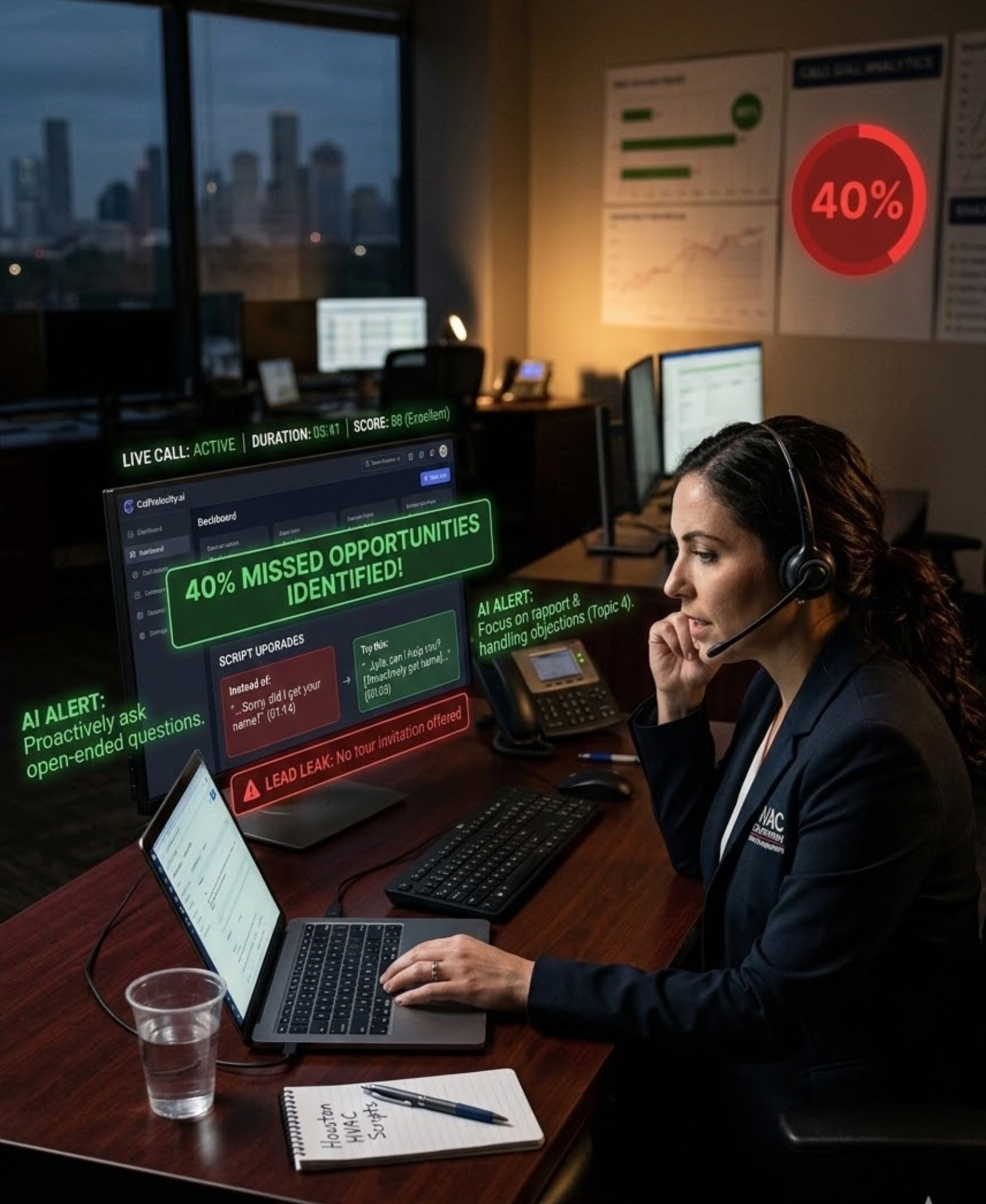
of HVAC inbound calls never convert to a scheduled appointment
Based on call analysis across regional HVAC companies, nearly 4 in 10 motivated, inbound callers leave without a booking - most without even being asked for one.
The problems we see are consistent across HVAC companies of all sizes. They're not random - they're patterns. And patterns can be fixed.
Pattern 1: Quoting price without anchoring value
The most common HVAC call looks like this: caller asks "how much does it cost to replace a 3-ton AC unit?" The CSR gives a price range - say $3,500 to $5,500 - and then waits. The caller says "okay, I'll think about it" or "let me shop around." The CSR says "sounds good, call us back." Call over.
The problem isn't the price. It's that nothing was said to make the price feel like a reasonable exchange. The caller has no context for whether $4,200 is a good deal or a bad one. Without any value anchoring, price is just a number - and a scary one.
Pattern 2: Letting "I need to get a few quotes" end the call
In HVAC, the multi-quote objection is nearly universal. Callers feel obligated to shop around - often even when they've already mentally chosen you. The typical CSR response is to accept this gracefully and say "of course, let us know." That's a mistake.
The caller who says "I want to get a few quotes" isn't rejecting you. They're telling you they haven't made a decision yet. That's an opportunity, not a goodbye.
Position yourself as the last call they need to make
When a caller says they want to shop around, don't fight it - reframe it:
"That's completely reasonable - you should compare. A couple things worth asking any company you call: do they include a labor warranty, and are their technicians NATE-certified? Those two things make a big difference in what you're actually getting for the price. We include both. But I'm happy to be the last call you make - if you want, I can hold a slot on our calendar while you're doing your research. It doesn't cost anything and you can cancel anytime."
Pattern 3: Missing the emergency signal
HVAC has something most service businesses don't: genuine emergencies. A family with a newborn and no AC in July isn't a "maybe" - they're a certain booking for whoever can get there first. Your CSR needs to recognize these calls and escalate their urgency response immediately.
Warning sign: When a caller volunteers temperature ("it's 94 degrees in here"), mentions vulnerable household members ("my mom is elderly"), or specifies a hard timeline ("we have guests coming Friday") - these are emergency-grade signals. Every second the CSR spends going through a standard script is a second the caller is dialing the next company.
Have an emergency script ready and train your team to use it
When urgency signals are detected, skip the standard flow entirely:
"I want to get you taken care of today - let me check our same-day availability right now. [pause] I have a technician who can be there between 2 and 5 this afternoon. Can I grab your address and get that locked in for you?"
Pattern 4: The diagnostic deflection
CSRs who don't know how to answer a technical question often say "let me have a technician call you back." This kills conversion rate. The caller was live, warm, and ready to book. Now they're waiting for a call that may never come - or if it does, they've already booked someone else.
Book first, diagnose on-site
"That's a great question and I want to make sure you get an accurate answer - that's actually something our tech can pinpoint exactly when they're on-site. Rather than give you an estimate over the phone that might be off, let me get you on the schedule and they'll give you the full picture and a firm price while they're there. Does tomorrow morning or afternoon work better?"
What good looks like
The best HVAC phone conversations we've analyzed share a few traits: they confirm the urgency early, they anchor value before price, they proactively offer financing, and they always end with an explicit booking attempt - never a passive "call us back."
The difference between a 35% phone close rate and a 60% close rate isn't magic. It's script, repetition, and feedback. Most HVAC companies give their CSRs a two-day orientation and then leave them alone on the phones for years. CallVelocity coaches on every call, flags every missed opportunity, and turns each one into a specific training prompt so improvement is continuous - not just at orientation.
See how your HVAC team's calls actually sound.
CallVelocity analyzes 100% of your inbound calls and shows you exactly where you're losing bookings. Book a demo - we'll analyze a real call live.
Book a Free DemoNo credit card · No commitment · 15 minutes